Therapists in New Hampshire
Therapists in New Hampshire may have different professional qualifications. Understanding those differences can help you decide whose approach feels appropriate.
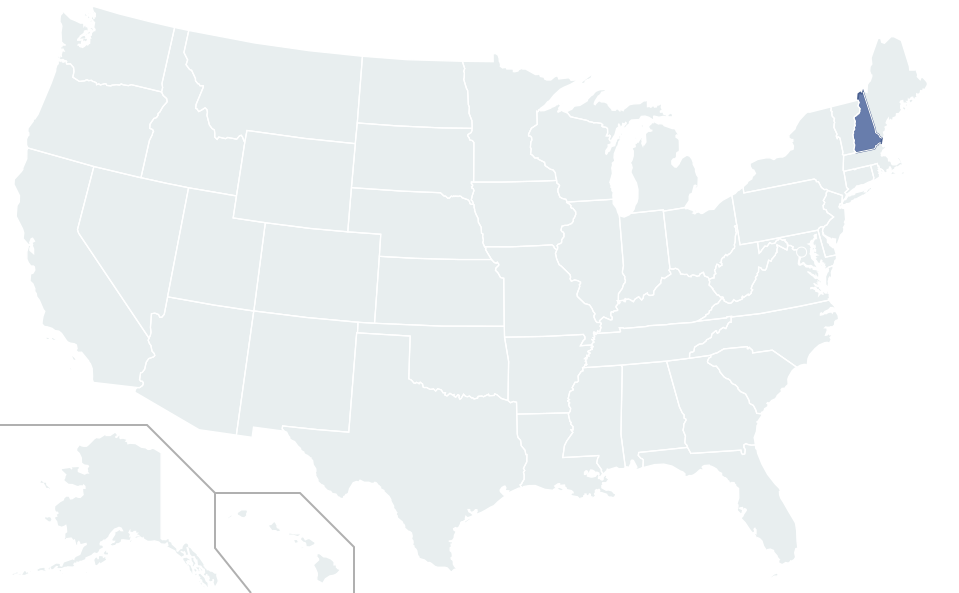
Meet therapists in New Hampshire
No therapist profiles are listed for New Hampshire yet. Therapists who offer online sessions in New Hampshire may be able to work with you from home.
New Hampshire at a glance
- 6,837 individual NPI registrants with mental health specialty codes report a practice address in New Hampshire, about 49.3 per 10,000 residents, compared with 42.1 across the United States.
- By specialty code: 3,565 with counselor codes, 1,670 with clinical social worker codes, 815 with psychologist codes, 198 with marriage and family therapist codes, 816 with psychiatry and psychiatric nurse practitioner codes. Some registrants hold more than one specialty code, so these groups overlap and do not add up to the total.
- According to the 2025 release of CDC PLACES, an estimated 15.3% of adults report frequent mental distress (14 or more days of poor mental health in the past 30 days) in New Hampshire, compared with 16.5% across the United States.
- According to the 2025 release of CDC PLACES, an estimated 22.7% of adults have ever been told by a health professional that they have a depressive disorder in New Hampshire, compared with 21.7% across the United States.
- 71 mental health treatment facilities are listed in New Hampshire in SAMHSA's 2025 National Directory of Mental Health Treatment Facilities.
- 91.8% of households in New Hampshire have a broadband internet subscription, which matters if you are weighing online sessions (American Community Survey 2019 to 2023 five-year estimates).
- 21 mental health Health Professional Shortage Area designations are in effect in New Hampshire, counting geographic, population and facility designations, which can overlap.
Sources: CMS NPPES data files (NPI Registry), CDC PLACES measure definitions, SAMHSA FindTreatment.gov, U.S. Census Bureau American Community Survey, HRSA shortage areas. A registry listing does not mean a clinician is accepting new clients, so check when you contact them.
About these figures: NPI counts are individual providers with a mental health or psychiatry specialty code and a practice address in the place, from the CMS November 2026 NPPES file with deactivated records removed; they show registration, not current licensure, availability or specialist training. Addresses are matched on the city name in the registered address, which can include places outside city limits. Rates per 10,000 divide November 2026 registrant counts by American Community Survey 2019 to 2023 population. SAMHSA counts are facilities in the 2025 National Directory of Mental Health Treatment Facilities (survey year 2024), which may differ from the live FindTreatment.gov listings. CDC PLACES figures are model-based estimates for adults and, like the Census figures, are general local context, not measures of how common any one condition is.
Understanding the different professional backgrounds
In New Hampshire, the Board of Mental Health Practice oversees clinical mental health counselors, marriage and family therapists, clinical social workers and pastoral psychotherapists under RSA 330-A. The state's Office of Professional Licensure and Certification administers the board and also oversees licensing boards for other professions, including psychology.
These professional titles tell you something about a person's qualifications. They do not necessarily tell you how that person will respond to your difficulties. Ask about their experience with the concerns you wish to discuss and how they decide which form of therapy to recommend.
What the license process tells you
Clinical mental health counselor applicants must pass a national clinical examination before applying, while marriage and family therapist applicants must pass their profession's national examination. Ask the therapist for their professional license number and contact the Office of Professional Licensure and Certification to confirm their credentials. The state's licensee services provide another source of verification information.
If you need an official letter confirming a mental health license, the state emails one for a $10 fee.
Receiving therapy away from a therapist's office
New Hampshire participates in PSYPACT, an interstate agreement for psychologists. Ask about the psychologist's individual authorization if you intend to receive care across state boundaries.
Before arranging online therapy, consider where you can speak privately. If you prefer meeting face to face and live near Manchester, discuss how regularly you could attend appointments.
When emotional distress becomes overwhelming or you experience suicidal thoughts, support is available by calling or texting 988.
Related searches
Questions about therapy in New Hampshire
What is a pastoral psychotherapist?
Pastoral psychotherapy is one of the license categories overseen by New Hampshire's Board of Mental Health Practice. If your religious beliefs matter to you, ask whether and how they might be included in treatment, according to your preferences.
Do you need an official letter confirming a therapist's license?
You can check credentials through the licensing office without necessarily requesting a formal letter. If you require written confirmation for a particular purpose, ask the office what the document contains and how to request it.
Latest articles
A little information can help when you are unsure what to expect.


Find someone to talk to in New Hampshire
Read about the therapists here. You can take your time deciding who to contact.