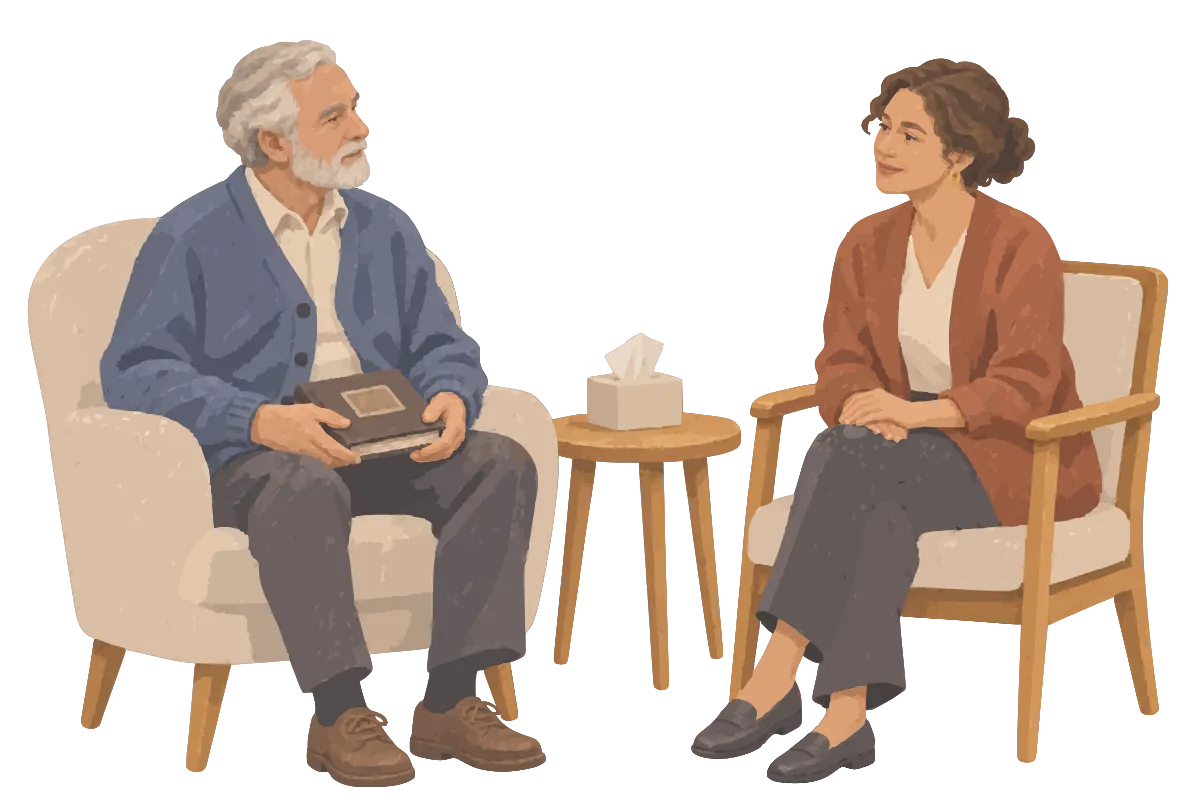
Understanding grief and loss
Grief counseling is a form of emotional support that helps you talk about a loss, understand your feelings and cope with the changes in your life. You can speak openly without feeling responsible for how someone close to you might react. Grief is a natural response to loss. It can follow a death, a miscarriage, a divorce, the loss of a pet, a serious diagnosis or the gradual changes in someone living with dementia.
Grief is not only sadness. MedlinePlus describes grief as a mental, physical, social or emotional reaction, which can include anger, guilt, anxiety and despair, as well as changes in sleep, appetite and health. You may feel exhausted, struggle to concentrate or find everyday tasks unusually difficult. New or concerning physical symptoms should also be discussed with a healthcare professional rather than assumed to be caused by grief.
The National Cancer Institute describes anticipatory grief before a death, common grief following a loss and complicated grief involving persistent, severe distress. These experiences can overlap. Even very painful grief can be a natural response to losing someone close to you. You do not need to have a mental health diagnosis to benefit from talking to a grief counselor about what you are experiencing.
If you are having thoughts of suicide or experiencing emotional distress, you can call or text 988 to speak with the 988 Suicide & Crisis Lifeline. If you or someone else is in immediate danger, call 911.
What grief feels like and the five stages of grief
The National Institute on Aging explains that there is no right or wrong way to mourn. You may feel numb, shocked or frightened. You might feel guilty for being alive or angry at the person who died. Crying easily, difficulty sleeping, changes in appetite, poor concentration and trouble making decisions are common experiences during bereavement.
The five stages of grief are denial, anger, bargaining, depression and acceptance. Psychiatrist Elisabeth Kubler-Ross originally described these responses in her work with people facing their own deaths. Although the terms may help you recognize certain emotions, the model does not establish a sequence that bereaved people are expected to follow. You may experience several of these feelings together, return to them at different times or never experience some of them. Acceptance is not a requirement for grieving well.
Other ways of understanding grief may feel more familiar to you:
- Changes in emotional intensity: a familiar song, an anniversary or an unexpected reminder can bring back feelings that had become less intense.
- Taking breaks from grief: you may spend some time thinking about your loss and other time working, resting or enjoying someone's company. These experiences can exist alongside each other.
- Maintaining a connection: keeping photographs, observing traditions or speaking about the person who died can be meaningful ways of remembering them. You do not have to stop feeling connected to someone to adjust to their death.
- Adjusting to life after loss: over time, you may develop new routines, relationships or interests while continuing to miss the person who died. Enjoying parts of your life again does not diminish the relationship you had.
Signs it may be time to see a grief counselor
You do not need to be struggling badly to see a grief counselor. Some people seek counseling within weeks of a death because they have nobody to talk to. Others seek support years later when feelings about an earlier loss return. It may help to speak with someone if:
- You are finding it difficult to manage work, household responsibilities or caring for your children.
- Your grief remains overwhelming, with little relief from the emotional pain.
- You find yourself unable to acknowledge the death or avoiding reminders of the person.
- Guilt, anger or regret occupies much of your attention.
- You are drinking more alcohol, struggling to eat or regularly unable to sleep.
- The death was sudden, violent or by suicide, or you witnessed circumstances that continue to distress you.
- You feel isolated or unable to discuss your feelings with family and friends.
If you are having thoughts of wanting to die or wishing you could join the person who died, seek immediate support by calling or texting 988. You can ask for help even if you have no intention of acting on those thoughts. Call 911 if you are in immediate danger.
For some people, grief remains intensely distressing and interferes substantially with everyday life. The National Institute on Aging describes this experience as complicated grief. It may involve persistent longing, difficulty accepting the death, frequent thoughts about the person who died and difficulty finding meaning in life. Prolonged grief disorder is a recognized clinical condition that a qualified professional may assess when severe grief persists after the death of someone close. The diagnostic criteria require at least 12 months since the death for adults and at least six months for children and adolescents, alongside other symptoms, significant distress or difficulties with daily functioning, and consideration of cultural, social and religious expectations. These time periods are not deadlines for grieving or reasons to delay seeking help. Grief can also coexist with depression, and a qualified mental health professional can assess whether additional treatment may be helpful.
How grief counseling and support groups help
Grief counseling is talk therapy focused on loss. According to the National Institute on Aging, talking regularly with a grief counselor or therapist may help someone come to terms with a death. The purpose is not to make you forget the person or hurry your grieving. Counseling gives you an opportunity to discuss difficult emotions, changes in your relationships and the demands of everyday life after your loss.
The terms grief counseling, bereavement counseling and grief therapy are often used interchangeably. There is no universally accepted clinical distinction between them. A licensed therapist may provide emotional support following a loss or use a more structured treatment when someone experiences prolonged grief disorder, depression or symptoms related to trauma. The approach depends on your experiences and what you would like help with.
Bereavement support groups
Bereavement support groups bring together people who have experienced a death. Hearing how others respond to loss may help you feel understood, particularly if people around you have difficulty talking about what happened. Some groups welcome people with any kind of bereavement. Others focus on the death of a spouse, child, parent or sibling, or on suicide loss. Hospitals, hospices, faith communities, funeral homes and senior centers may organize these meetings. You can also attend a pet loss support group. Online grief support groups offer another option if traveling is difficult or you prefer to participate from home.
Individual counseling and group support serve different purposes, and you may find both helpful. A group offers opportunities to share experiences, while individual appointments allow you to discuss matters you would prefer to keep private. If the person who died received hospice care, you can ask the hospice about bereavement services for family members. You do not have to speak during every group meeting, and it is reasonable to ask how meetings are conducted before attending.
Types of therapy for grief
There is no single best therapy for grief. A therapist may consider the circumstances of your loss, how it affects your daily life, your preferences and any other mental health difficulties you are experiencing.
- Supportive grief counseling: offers time to discuss the loss, express difficult feelings, consider changes in your relationships and prepare for occasions that may be emotionally difficult.
- Prolonged grief disorder therapy: a structured treatment designed specifically for persistent, distressing grief following a death. It may involve discussing memories of the death, addressing avoidance, maintaining meaningful connections and identifying personally important goals.
- Cognitive behavioral therapy (CBT): may help you examine distressing beliefs about responsibility, guilt or the future and address patterns of behavior that contribute to difficulties in everyday life.
- Eye movement desensitization and reprocessing (EMDR) and other trauma-focused therapies: may be considered when grief occurs alongside PTSD or significant trauma symptoms. These treatments address traumatic experiences rather than ordinary grief itself.
- Meaning-centered and narrative approaches: may help you explore the personal significance of your loss, your relationship with the person who died and your sense of identity following the death.
- Acceptance and commitment therapy (ACT): encourages you to respond to painful thoughts and emotions with greater flexibility while making choices consistent with what matters to you.
- Family therapy: offers family members an opportunity to discuss their different responses to loss, improve communication and consider how to support one another.
A sudden or violent death can leave you dealing with both bereavement and distressing memories of what happened. Therapists with experience in trauma and PTSD may assess these difficulties alongside your grief. Treatment can address both experiences when appropriate. If depression or another mental health condition is also present, a qualified prescriber can discuss medication with you.
What you can talk about in grief counseling
Many people worry that they will not know what to say, or that they will cry the whole time. Both are fine. A grief counselor may ask about the person who died, how they died, what your relationship was like and what the days since have been like. Some people want to tell the whole story in the first session. Others need a few weeks before they can.
Things people talk about include:
- The last days, the hospital, the phone call or the moment they found out.
- Guilt about things said or left unsaid, or decisions made about care.
- Anger at the person, at doctors, at God or at relatives.
- Relief after a long illness, and guilt about feeling relieved.
- Feeling that friends have moved on and expect them to as well.
- Birthdays, holidays and anniversaries.
- How their sense of identity has changed after losing a spouse, partner, sibling, parent or child.
- Everyday changes, such as living alone, money, or sorting belongings.
You do not need to make your grief easier for the counselor to hear. Knowing what to expect in a first therapy session may help if you feel nervous about talking to someone for the first time.
Grief after different kinds of loss
The circumstances of a loss can influence the feelings, responsibilities and decisions you face afterward. There is no reliable way to compare the pain of one person's bereavement with another's.
- Sudden or violent death: you may experience shock, distressing memories or unanswered questions alongside your grief. Police investigations, legal proceedings or unwanted public attention may create additional difficulties.
- Suicide loss: you may struggle with guilt, anger or questions about what could have happened differently. Fear of judgment can make discussing the death difficult. Groups specifically for people bereaved by suicide may offer additional support.
- Death of a child: parents may grieve the relationship they had, the future they imagined and changes in their identity as a parent. Relationships with partners and surviving children may also change.
- Pregnancy and infant loss: miscarriage, stillbirth and infant death may bring profound grief. Other people may not fully recognize the significance of the loss or understand why certain dates and occasions remain painful.
- Death of a spouse or partner: you may face loneliness, changes in your identity, financial concerns and unfamiliar household responsibilities while grieving someone who shared your everyday life.
- Pet loss: the death of an animal companion can affect your routines, relationships and emotional well-being. A pet loss support group or a counselor experienced in this kind of bereavement may provide a place to discuss feelings that others sometimes overlook.
- Ambiguous loss: you may grieve when someone remains physically present but your relationship with them has changed significantly, such as through dementia. You may also experience this kind of grief when someone is missing or there is uncertainty about their absence.
Grief can also follow losses that do not involve a death, including divorce, estrangement, unemployment, declining health or the loss of an expected future. These experiences deserve recognition even when other people do not understand their significance. If you have spent a long period caring for someone who was ill, counseling for caregiver stress may help you discuss the demands of caregiving and the complicated feelings that can remain afterward.
Grief counseling for children and teenagers
Children express grief in different ways, and their understanding of death changes as they develop. The National Cancer Institute describes three common concerns among bereaved children: responsibility for the death, fear of dying themselves and uncertainty about who will care for them. Young children may move quickly between playing and feeling upset. Teenagers may prefer to discuss their feelings with friends, become quieter or express grief through changes in their behavior.
Signs that your child may benefit from additional support include:
- Persistent difficulty sleeping, nightmares or intense fear of separation from a parent or caregiver.
- A return to earlier childhood behaviors, such as bedwetting or baby talk.
- Ongoing difficulties at school, withdrawal from friends or unusually frequent angry outbursts.
- Persistent guilt, distressing memories or fears about the safety of other family members.
If your child talks about wanting to die or being reunited with someone through death, take their words seriously and seek immediate professional support. You can call or text 988 for crisis guidance. If your child is in immediate danger, call 911.
Children's grief counseling may involve conversation, play, drawing or storytelling, depending on the child's age and preferences. Parents and caregivers may participate when appropriate. A counselor can help you discuss death honestly, answer difficult questions and recognize how your child's understanding of the loss changes over time. Bereavement groups and grief camps for children may also provide opportunities to spend time with others who have experienced a similar loss. Children may need renewed support as they reach developmental milestones or encounter important family occasions.
How to choose a grief counselor
Look for a licensed mental health professional with experience in bereavement and the circumstances surrounding your loss. If you are experiencing persistent grief, traumatic memories or difficulties within your family, ask about their training in those areas. A professional's license and experience are separate considerations.
Credentials you may see
- LCSW: licensed clinical social worker. Clinical social workers may provide psychotherapy and help people address emotional difficulties and changes in daily living.
- LPC or LMHC: licensed professional counselor or licensed mental health counselor. These professionals may provide psychotherapy for grief and related emotional difficulties.
- LMFT: licensed marriage and family therapist. Their training includes relationships and family dynamics, which may be relevant when several family members are grieving.
- Licensed psychologist: often holds a PhD or PsyD and may provide psychological assessment and psychotherapy.
- Psychiatrist (MD or DO): a physician specializing in mental health who can assess mental health conditions and discuss medication. Some psychiatrists also provide psychotherapy.
- Thanatology certification (CT or FT): an additional credential concerning death, dying and bereavement. It does not independently establish professional licensure or eligibility to provide psychotherapy.
Professional licensing requirements and credential titles vary across jurisdictions. You can ask a prospective counselor about their qualifications and confirm that they are licensed to provide the services you need.
Questions to ask a grief counselor
The National Institute of Mental Health recommends an initial conversation to learn about a therapist's experience and treatment approach. You may find the following questions helpful:
- What experience do you have supporting people through losses like mine?
- How do you assess and treat persistent, distressing grief?
- What experience do you have with traumatic bereavement or suicide loss?
- Do you provide counseling for children or family members?
- Do you offer online grief counseling, and are you licensed to provide care where sessions will take place?
- How would you approach sessions if talking about the death feels too difficult initially?
Online grief counseling may be useful if leaving home feels difficult or you prefer to speak with someone remotely. Knowing what happens during an online therapy session can help you decide if this format suits you. You can also consider what matters most to you in a therapeutic relationship, including cultural understanding, religious beliefs and experience with your type of bereavement.
When you feel ready to speak with someone, you can find a grief counselor whose professional experience relates to your needs or contact a therapist for grief and loss to discuss what has been difficult for you. You do not have to know exactly what you want from counseling before making contact. Understanding how to find a therapist who fits your needs may also help you decide whom you would feel comfortable speaking with.
Common questions
Why do some losses feel especially difficult to cope with?
The circumstances of a death, your relationship with the person, previous experiences of loss and the support available to you can all influence grief. Sudden deaths, suicide loss and relationships involving unresolved conflict may bring additional difficulties. There is no hierarchy of grief, and you do not need to justify the intensity of your feelings to seek counseling.
What should you avoid doing while grieving?
If possible, postpone major decisions, such as selling your home or leaving a job, until you feel better able to consider them. Try to avoid relying on alcohol or drugs to manage emotional pain. You may need time alone, but maintaining contact with someone you trust can be helpful. Avoid measuring your grief against another person's experiences or an expected timeline.
What qualifications should a grief counselor have?
Look for a licensed mental health professional with experience in grief and bereavement. This may be a clinical social worker, professional counselor, marriage and family therapist or psychologist. Additional training in prolonged grief or trauma may be relevant to your circumstances. Thanatology certification can indicate additional knowledge about death and bereavement, but it does not replace a mental health professional's license.
What type of therapy helps with grief?
The appropriate approach depends on your experiences and what is causing you difficulty. Supportive grief counseling offers opportunities to discuss your loss and its effects on your life. Structured treatments are available for prolonged grief disorder. Cognitive behavioral approaches may address distressing beliefs or avoidance, while trauma-focused treatments may be appropriate when PTSD or significant trauma symptoms are also present.
How long does grief last?
Grief has no fixed duration. Its intensity may change gradually, and reminders of someone who died can bring painful feelings back years later. Persistent, severe grief that substantially disrupts everyday life may warrant assessment for prolonged grief disorder. The clinical time requirements for this condition are not deadlines for recovering from loss, and you can seek counseling whenever you feel you need support.
Is grief counseling worth it if my loss was years ago?
You can seek grief counseling regardless of how long ago your loss occurred. Earlier bereavements may become particularly difficult around anniversaries, new losses or significant life changes, such as becoming a parent. You may also have had responsibilities that left little opportunity to discuss your feelings at the time. A counselor can help you explore how that loss continues to affect your life.
Where can you find bereavement support groups?
Hospices, hospitals, faith communities, funeral homes and senior centers may organize grief support groups. Some welcome people experiencing any bereavement, while others focus on particular losses, such as the death of a partner or child, or suicide loss. Online groups are another option. You can ask your healthcare provider or a hospice about available groups and how their meetings are conducted.
Can grief counseling help after losing a pet?
Yes. Losing an animal companion can bring intense sadness, loneliness, guilt and changes to your everyday routines. These feelings may be particularly difficult if people around you underestimate the significance of your loss. A counselor experienced in pet bereavement may help you discuss these feelings. A pet loss support group can also offer opportunities to speak with others who have experienced a similar loss.
Can grief counseling be done online?
Yes. Grief counseling can be provided through video appointments and, where appropriate, telephone sessions. Remote counseling may suit you if traveling is difficult or you prefer to speak from home. Ask about confidentiality, the counselor's experience with online therapy and their eligibility to provide care where you are located. Consider whether you have somewhere private to discuss sensitive feelings without interruption.
Sources and further reading
- National Institute on Aging: Coping With Grief and Loss
- National Cancer Institute: Grief, Bereavement, and Loss (PDQ) Patient Version
- MedlinePlus: Bereavement
- National Institute of Mental Health: Psychotherapies
- 988 Suicide & Crisis Lifeline
Page updated November 2026.
Grief counselors by location
Grief counselors across the United States